Baffle Filters vs. Mesh Filters: Picking the Best for Your Commercial Kitchen
Compare baffle and mesh grease filters: grease capture, fire resistance, cleaning, cost and durability — and how to choose for your cooking load.
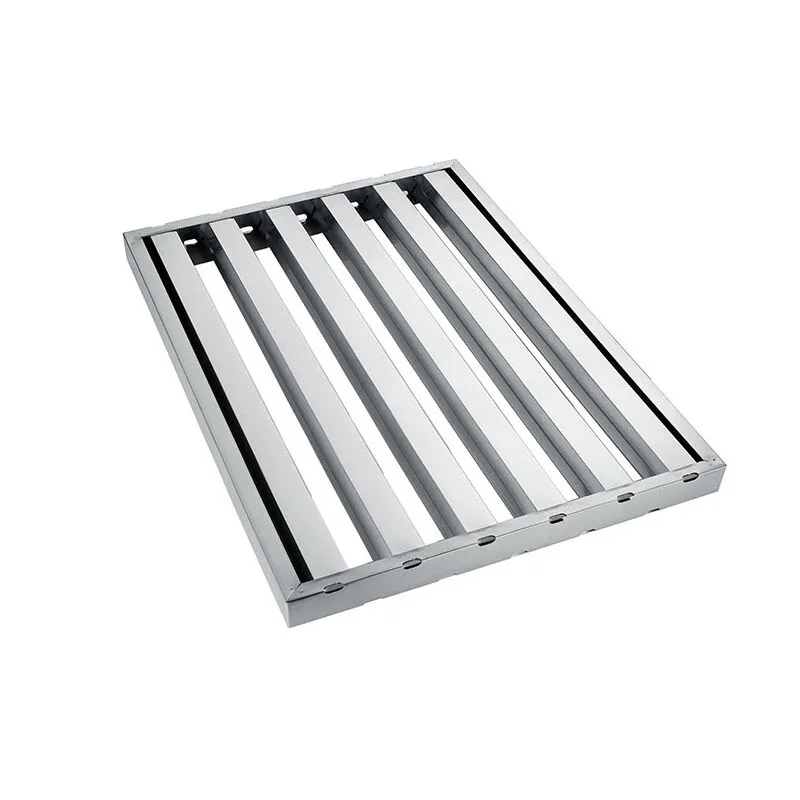
The role of grease filters in commercial kitchens
Grease accumulates fast in restaurants, hotels and food halls. It drifts in the air from deep frying, grilling and oven work. Without effective filtration, this grease coats vents, blowers and ductwork — harming airflow and raising fire risk.
A good filter captures most of the grease at the source, usually in the hood above the cooking line. The best filter protects your crew, reduces cleaning hours and trims repair costs.
House kitchens can manage with simple setups, but commercial kitchens face non-stop operation, thicker grease loads and stricter fire codes. Filters there must take heat, swap out easily and satisfy fire inspectors.
How baffle filters capture grease
Baffle filters are built from stainless steel formed into bent, stacked plates. Air passes through, but the geometry forces it to twist and spin. Centrifugal action pushes grease particles outward, where they cool and drop into catch channels.
There are no tiny grids to jam — just open paths that let air pass freely. This makes baffles well suited to heavy oil-mist environments such as burger lines and wok stations, where they extract grease with little pressure drop so exhaust fans do not strain.
Key benefits: fire safety (metal build, grease collected in slots rather than soaked into a medium), easy cleaning (dishwasher or degreaser soak), longevity (stainless steel resists rust and knocks), and efficiency (80-90% grease capture keeps ducts cleaner for longer).
Trade-offs: baffles weigh more than mesh panels, so handling during installation and washing takes more effort, and their drainage channels need regular emptying in the busiest kitchens.
How mesh filters work
Mesh filters use stacked wire nets to catch grease — essentially a tight screen that air is pushed through. Droplets stick in the weave while cleaner air continues into the duct.
They are mostly aluminum or coated steel, lighter and less expensive to produce. In commercial kitchens, mesh filters suit average grease levels — bakeries, mild fry areas — and they also trap visible smoke particles.
Advantages: low cost, light weight (easy to grab and fit), good smoke capture and wide compatibility with standard hoods.
Challenges: mesh clogs fast in heavy-grease zones. A loaded mesh cuts airflow, which tires fans and raises power bills. Cleaning needs care — brush the wires gently without distorting them — and a grease-full mesh may not pass fire checks in high-risk kitchens.
Head-to-head comparison
Material: baffle filters are stainless steel; mesh filters are aluminum or coated steel.
Grease capture: baffles spin air for a strong catch; mesh holds grease in the net for an average catch.
Fire resistance: baffles are top-notch with minimal threat; mesh is acceptable but burns more readily when saturated.
Maintenance: baffles are washer-safe and quick; mesh needs brushing, more often.
Cost: baffles cost more up front; mesh costs less up front.
Best for: baffles suit busy, oily cooking; mesh fits light-to-moderate grease loads.
Durability: baffles are very tough; mesh fades quicker.
Beyond the sticker price, think long-run cost: baffle filters save labor and energy over time even with a higher purchase price.
How to choose for your kitchen
Start with grease volume. Heavy deep frying needs baffle filters to avoid constant clogging; mostly oven work can run on mesh.
Check local codes — some jurisdictions demand flame-resistant filtration, which points to baffles.
Verify size and fit against your hood channels, and consider airflow speed: baffles hold steady performance while loaded mesh lags.
If you are still unsure, send us your cooking line description and hood dimensions — we will recommend a structure, steel grade and size.
Cleaning and maintenance schedules
Filtration only works if the filter is clean, and the two structures behave very differently under a cleaning regime. A loaded mesh panel can lose a large share of its free area within a single service, so kitchens running mesh on a fry line typically wash panels weekly or even between shifts.
Baffle panels tolerate longer intervals because grease drains into channels instead of sitting in a weave. Most operations wash baffles once a week, and many simply run them through the rack or flight dishwasher at the end of service.
Whichever structure you run, build the routine around three checks: visible grease carry-over on the fan side of the filter, drainage channels that are not overflowing, and handles or frames that have not been bent in handling. Bent frames break the seal at the hood channel and let unfiltered air bypass the panel entirely — a bypass is worse than a dirty filter.
For wash-down, use an alkaline degreaser rated for food-contact stainless, rinse thoroughly and let panels dry before refitting. Avoid chloride-based cleaners on any stainless grade; chlorides attack the passive layer and are the most common cause of pitting we see on returned samples.
Sizing, fit and installation notes
Grease filters are sized to the hood channel, not to the cooking line. Measure the existing panel or the hood track in three places: overall height, overall width and thickness, plus handle position and airflow direction. Panels are normally installed at an angle so captured grease runs down into the collection gutter — installing them flat or reversed reduces capture and floods the duct.
Standard commercial sizes exist for a reason: they keep spares interchangeable across sites. If your hood uses a non-standard opening, we cut to your drawing. Custom sizes are common for island hoods, back-bar hoods and older European equipment.
When ordering a batch, specify the quantity per size rather than a single total, and confirm the packing method. Panels ship best standing on edge with corner protection; stacked flat in a deep carton, the bottom units take the weight of the whole column and arrive with distorted frames.
Multi-stage setups and when to combine structures
Some ventilation designs use more than one stage: a baffle panel in the hood for bulk grease capture, followed by a finer mesh or media stage for polish, and sometimes a UV or electrostatic unit downstream for smoke and odour.
If your hood already carries a downstream unit, the first stage matters more, not less — it decides how often the expensive stage needs service. A baffle first stage protects UV lamps and media filters from heavy loading and keeps their maintenance intervals realistic.
For heavy char-grilling, wok ranges and high-volume frying, we normally recommend baffle only. Mesh is at its best in bakeries, convection-oven rooms, coffee and pastry counters, and light prep areas where smoke particle capture matters more than bulk grease volume.
Quick answers
Which filter captures more grease?
Baffle filters typically capture 80-90% of grease particles by spinning them out of the airstream; mesh filters catch droplets in the weave but clog faster under heavy grease load.
Are baffle filters dishwasher safe?
Yes. Stainless baffle filters can be run through a commercial dishwasher or soaked in degreaser. Mesh filters should be soaked and gently brushed instead.
Which is better for a heavy-frying kitchen?
Baffle. Mesh suits light to moderate cooking loads such as bakeries; heavy frying and grilling lines need baffle geometry to avoid clogging and fan strain.
Need filters sized to your hood?
Send us hood dimensions or a sample — we manufacture baffle, mesh and Nano filters to your sizes, with handles and frames to match.