Grease Filters for Commercial Kitchens: A Buyer's Guide by Cooking Load
Friday, 6 p.m., and the hood over the fry line is working hard. Six baskets down, two more waiting, and the air above the vats is a haze the filters are supposed to catch. The filters are original to the hood, installed with the building, and nobody has ever asked if they are the right ones for this kitchen. A hood over a fry line needs different filters than a hood over a char-grill or a bakery oven. Buying grease filters for a commercial kitchen is a load-matching decision, not a parts-number decision. Here is how to match the filter to what you cook.
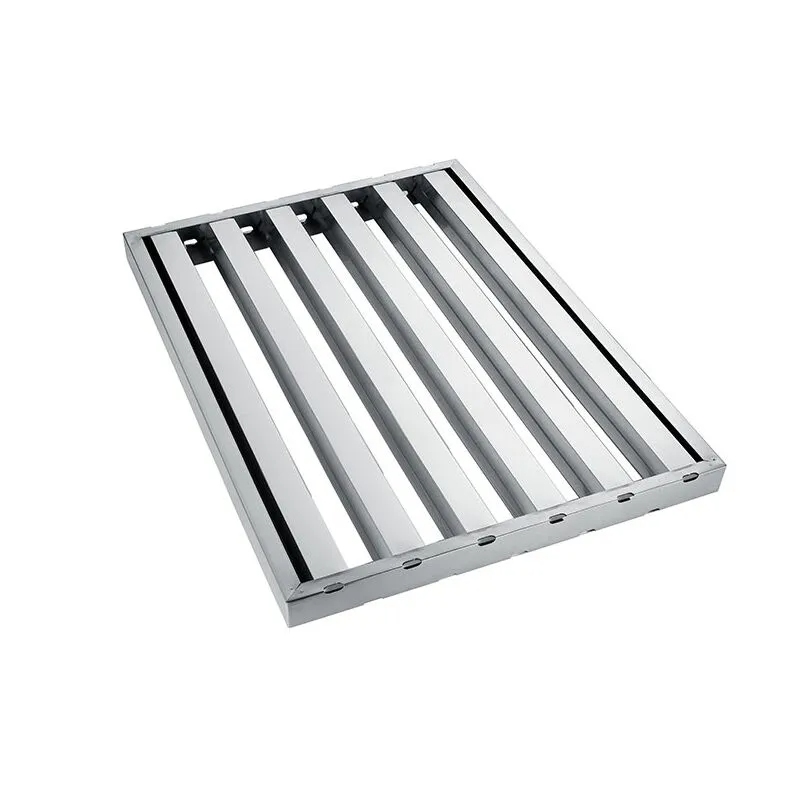
Match the filter to the cooking load, not the hood brand
The hood is the same box whether you fry, grill or bake under it. The filter is what changes. Fry lines produce heavy aerosol grease that baffles catch well. Char-grills throw particles and flame-flavor grease that mesh catches better. Ovens and bakery lines run lighter loads where a standard baffle is plenty. Choosing by cooking load instead of hood brand is the difference between a filter bank that works for years and one that clogs in months.
A kitchen we know ran mesh panels over a six-vat fry line because the panels were on sale. The mesh clogged twice a week, the fry cooks spent their closing time scrubbing wire, and the bank was replaced with baffles within a quarter. The filter that is 'better' in the catalog is the one that matches the load under your hood. Our baffle vs mesh guide compares the two structures directly, and the kitchen-type guide maps filters to cooking styles.
Fry lines: high-volume aerosol grease needs baffle panels
A fry line runs hot oil all day, and every basket lifts a plume of aerosol grease toward the hood. Baffle panels are the right call here: the Z-shaped blades spin the grease out of the airstream, it drips into the catch channels, and the panel drains itself. Baffles hold a surprising amount of grease before they need cleaning, which matters on a line that runs two hundred pounds of oil a day.
For heavy fryers, specify stainless baffles with the tighter channel spacing. Ask your supplier about the blade pitch - a steeper pitch catches more but clogs faster, and the right answer depends on your volume. We build baffle banks for fry lines every week, and the sizing guide shows how to order a bank that fits your track: measure and order replacement filters.
Char-grills and particulate cooking: mesh handles the particles
Char-grills, wood-fired ovens and wok ranges throw particles a baffle lets straight through. Mesh and louver panels catch them in the wire grid - which is exactly what a hood over a grill line needs. The catch is real: mesh clogs faster and wants cleaning more often. That is not a flaw. That is the filter working.
A kitchen we know ran a single hood bank over both a fry line and a char-grill and averaged the filter choice. They got baffles everywhere because baffles were the cheaper part. The grill side filled the duct with ash in a month. The fix was not a different hood - it was baffles on the fry side, mesh on the grill side, sized to the same track so the bank stayed uniform. Our cleaning guide covers the wash routine that keeps mesh alive, and the schedule guide sets the frequency.
The steel decision: 430 or 304 stainless
Both steels run in commercial filters, and the choice is your wash routine, not the price tag. 430 stainless costs less and is fine for kitchens with soft water and a consistent cleaning schedule. 304 stainless resists the chloride attack from hard water and aggressive degreasers - the pitting that starts at a weld and creeps across the panel.
If your old panels pitted through, do not repeat the same purchase. Upgrade the steel and the panels outlast the hood. The chemistry is covered in detail in our 430 vs 304 guide, and the cleaning guide explains why chlorinated cleaners are the enemy of stainless. Specify the alloy when you order, and ask the supplier what they recommend for your water hardness.
Sizes, foot-prints and the nameplate check
Before you order, pull one panel and check three numbers: width, height, and channel depth. Write them down next to the hood model number if the nameplate is legible. A quarter-inch error in width lets air slip around the panel and grease bypasses straight into the duct - the exact failure that turns a clean hood into a fire hazard.
If the nameplate is gone, the track measurements are enough. A supplier that sizes from track measurements plus a photo has been through this a thousand times. We cut filters to standard and custom sizes, so the bank fits the track the first time. Send us your numbers and we will quote the matching bank: request a quote.
The compliance layer: NFPA 96 and UL 1046
Whatever you buy, the filter bank has to hold up under the inspection that matters. NFPA 96 governs the grease removal system and treats filters as the first checkpoint; UL 1046 covers the safety listing for the panels themselves. A supplier who cannot tell you whether their filters are UL-listed is not a supplier to bet a fire inspection on.
Ask for the listing documentation before you order, not after. The compliance picture is laid out in our UL 1046 and NFPA 96 guide, and the replacement guide covers the wear signs that send a panel to the bin. Match the filter to the load, pick the steel for your water, and the bank passes inspection for years.
Quick answers
What type of grease filter does a commercial kitchen need?
Look at what you cook, not at the hood brand. Six vats of frying? Baffle panels - they spin the grease out of the air. A char-grill throwing ash? Mesh panels catch the particles. Ovens and bakery lines run fine on standard baffles. Match the filter to the smoke coming off the line.
Are baffle or mesh grease filters better?
Neither wins on its own. Baffles catch aerosol grease and drain themselves - they belong over fry lines. Mesh catches more particulate and clogs faster - it belongs over grills. The filter that is "better" is the one matched to the load under your specific hood.
What steel grade should my grease filters be?
Soft water and a steady wash schedule? 430, and it saves you money. Hard water or aggressive cleaners? 304 - it shrugs off the chloride pitting that eats 430 from the welds outward. If your old panels pitted through, that is the upgrade to make.
Can I order commercial grease filters in bulk?
Yes. Send your track measurements, panel photos and cooking volume, and we quote the whole bank - baffle, mesh or Nano, standard or custom, with part numbers on the line. Multi-hood kitchens get the volume price.
Not sure which filter matches your cooking load?
Tell us what you cook and how many hours a day the hood runs. We will match the right structure, steel and size - and quote wholesale pricing for the full bank.
Request a Quote